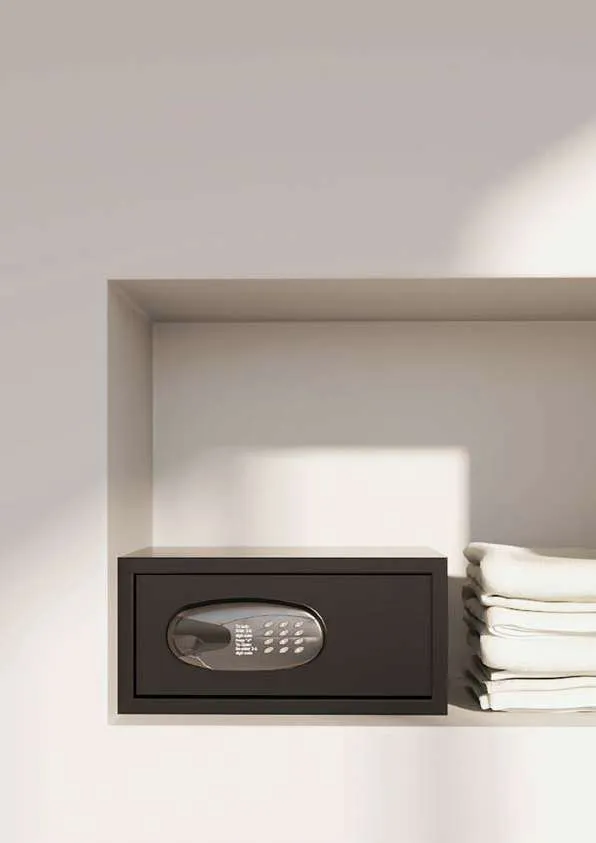
An in-room safe reassures guests and protects the hotel: fewer lost items, fewer disputes. But it has to be big enough, simple to use and easy for reception to manage. Here are the points to check.
Size: think laptop
Guests no longer store just jewellery and a passport: they want to put their laptop in it. That is what should guide your choice of capacity.
| Capacity | What it holds | Which rooms |
|---|---|---|
| About 12 litres | Papers, jewellery, phone, small tablet | Compact rooms, tight budgets |
| About 25 litres | Laptop, tablet, papers | Standard for double rooms and suites |
Check the internal dimensions (width and depth) rather than just the volume: they decide whether a 15-inch laptop fits flat. Our in-room safes come in 25 litres and in a compact 12-litre version.
Opening: guest code and master code
A hotel safe opens with a code chosen by the guest, entered on the keypad and reset for each stay. For day-to-day operations, three functions are essential:
- a master code to open the safe if the guest has forgotten theirs;
- a mechanical emergency key, in case the batteries run flat;
- a temporary lockout after several wrong codes, to discourage attempts.
Write a clear procedure for reception: opening in the guest’s presence, identity check, written record.
Fixing: a safe must be secured
A safe that just sits there isn’t a safe. It must be fixed to the wall or floor through the holes provided, with fixings suited to the surface. Inside a unit, it is fixed into the structure: if we are making your custom furniture, the position and reinforcement are planned at the drawing stage.
Positioning
- In the wardrobe, at hand height: the most common and most discreet position.
- In a low unit, under the desk or in the console: practical, but make sure the keypad stays visible and well lit.
- Avoid the bare floor, which is awkward for guests, and anywhere visible from the doorway.
Power and maintenance
In-room safes run on batteries: plan a preventive change during deep cleans to avoid emergency openings. The low-battery indicator gives a warning before they fail.
The details that make a difference
- A carpeted interior protects belongings and stops metallic noises at night.
- Interior lighting helps guests find their things.
- A backlit keypad makes it easier to enter the code in low light.
Completing room security
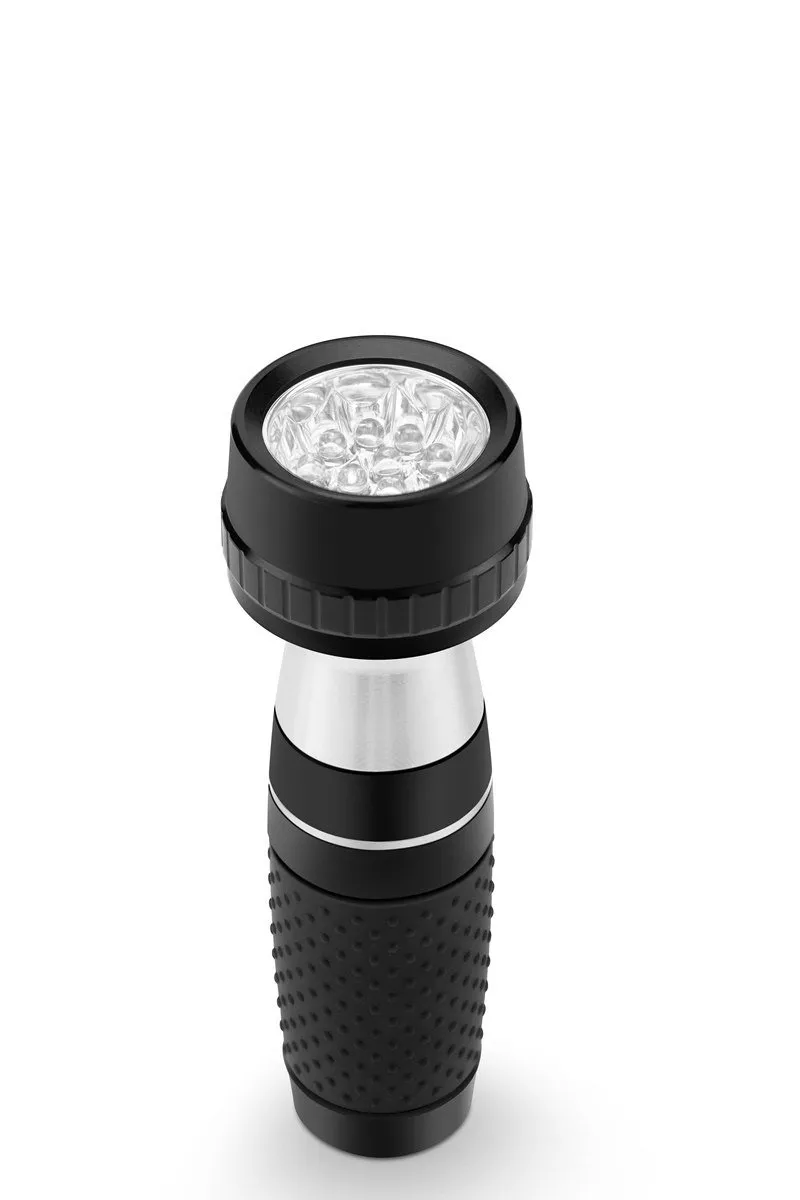
The safe is just one element. Our safety equipment includes, for example, an emergency torch that comes on when the power fails. And for a fully equipped room, see our checklist of everything a hotel room needs.
Common mistakes
- Choosing too small: a safe that won’t take a laptop is only half useful, and the guest leaves the laptop on the desk.
- Not fixing it: a loose safe can be carried off.
- Placing it too low: the guest has to kneel down to enter the code.
- Forgetting the emergency procedure: without a master code or emergency key, a forgotten code becomes a costly call-out.
A clear procedure for reception
Train your teams in a simple procedure:
- The guest reports that they can no longer open the safe.
- Reception checks their identity and room number.
- A member of staff opens the safe in the guest’s presence, using the master code or the emergency key.
- The intervention is recorded in the log.
This protects the guest as much as the hotel in case of a dispute.
Safes and insurance
An in-room safe reassures guests, but it doesn’t replace a reception safe for very valuable items. Set out the terms of use clearly in the welcome booklet, along with the option of leaving items at reception.
In short
- Choose a capacity that takes a laptop (about 25 litres).
- Insist on a master code and an emergency key.
- Always fix the safe.
- Put it in the wardrobe, at hand height.
Tell us how many rooms you have and we’ll suggest the right model, with a quote within one working day.