The minibar is a small piece of equipment with a double impact: it can earn money (drink sales, or complimentary water that guests appreciate), and it can cost you dearly in bad reviews if it hums all night. Here is how to choose one, criterion by criterion.
Criterion no. 1: silence
In a guest room, the minibar is rarely more than two or three metres from the bed. A domestic compressor fridge switches on and off several times an hour, and the noise and vibration are enough to wake a light sleeper.
There are three technologies:
| Technology | Noise | Energy use | Recommended for |
|---|---|---|---|
| Thermoelectric (Peltier module) | Almost none, no vibration | Moderate | Guest rooms, suites |
| Absorption | None | Higher | Guest rooms, suites |
| Compressor | Audible start-ups | Lowest | Pantries, service areas |
In guest rooms, go for a compressor-free minibar. Our hotel minibars are thermoelectric: no start-up noise, no refrigerant gas and almost no maintenance.
Glass door or solid door?
This is as much a question of sales strategy as of decor.
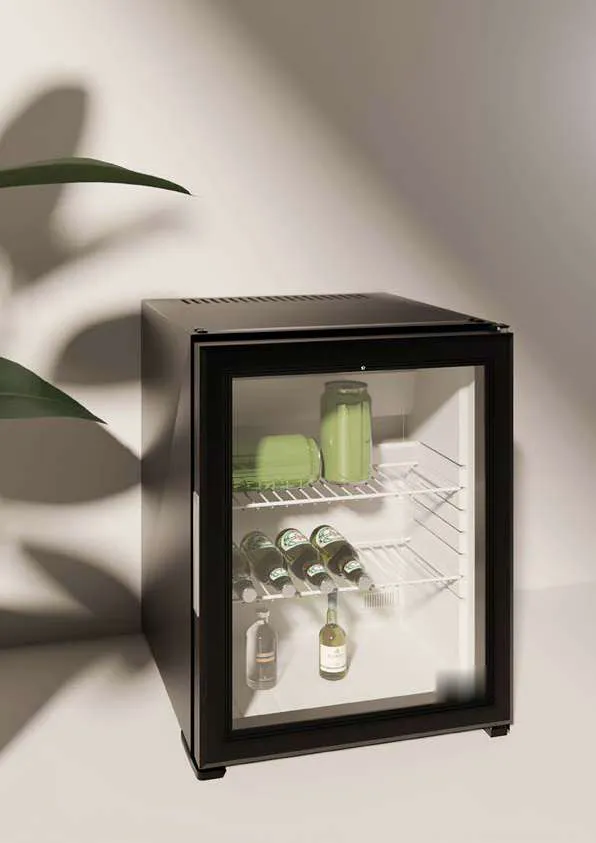
- A glass door, lit by LEDs, works like a shop window: guests see what’s on offer without opening it, which encourages them to buy. Ideal if you sell drinks and snacks. See the Calvi glass-door minibar.
- A solid door blends into the furniture and keeps the room calm. It suits properties that offer complimentary water or a small selection.
Which capacity?
- 30 litres: water, soft drinks, a few miniatures. The standard for double rooms.
- 40 litres: bottles of wine, 50 cl formats, a wider selection. Useful in suites and for long stays.
Check the internal height if you plan to stand 75 cl bottles upright.
Built-in or freestanding?
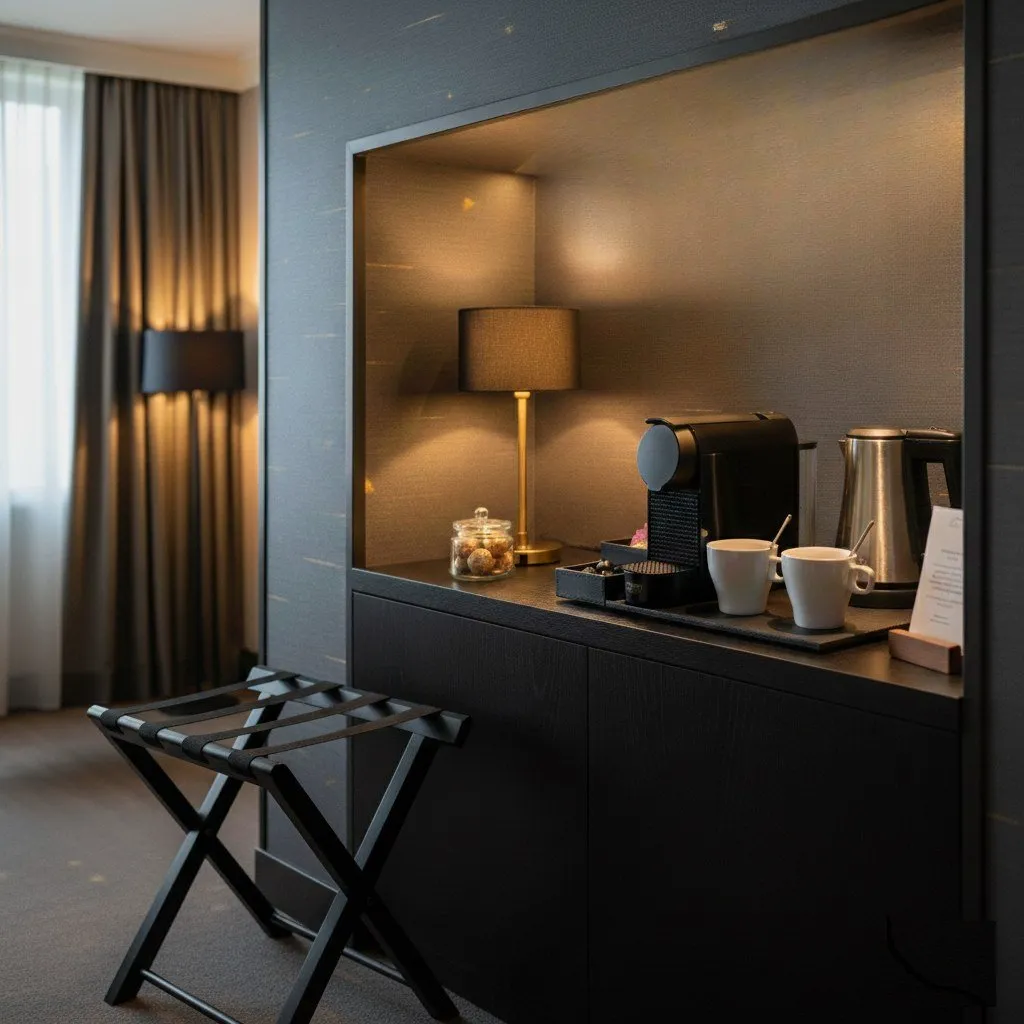
A minibar can stand in an open unit or be built into a niche. Either way, it has to get rid of its heat: a few centimetres of air behind and above it, or a ventilation grille. A niche that’s too tight pushes up energy use and brings down performance.
If we are also making your custom furniture, our design office sizes the niche at the drawing stage. That’s the advantage of a single partner for furniture and equipment.
The details that matter
- The energy label: compare annual consumption, multiplied by your number of rooms.
- The lock: useful if the minibar contents are sold, unnecessary if they are complimentary.
- Personalisation: a logo on the door reinforces your brand (above a minimum quantity).
- The colour: black or white, to suit your furniture.
Minibar or welcome tray?
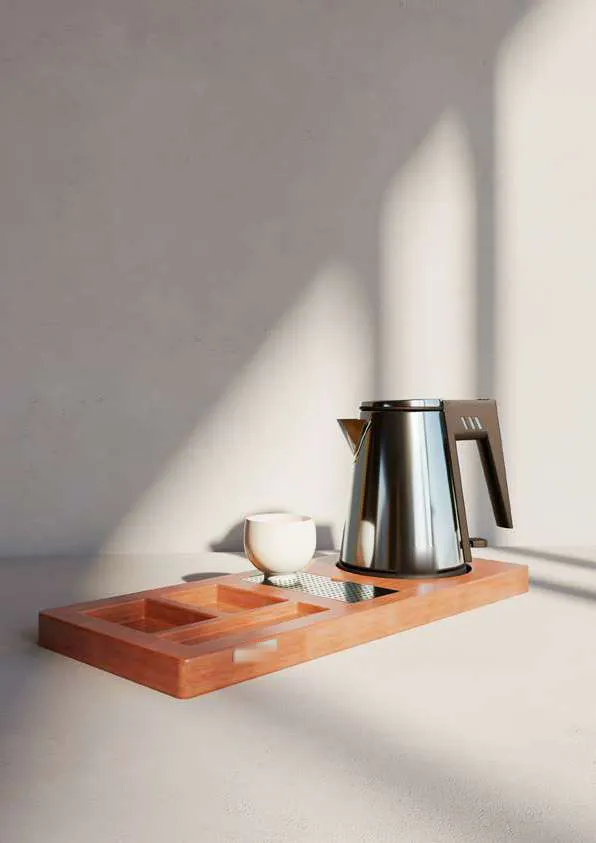
The two go together. The minibar keeps drinks cold; the welcome tray provides tea, coffee and hot water. In a budget hotel, a tray alone may be enough; from the mid-range upwards, guests expect both. We explain how to put one together in our guide to hospitality trays.
Upkeep and day-to-day running
A hotel minibar needs very little maintenance, provided a few good habits are in place:
- Clean the inside at every deep clean with a mild product, and check the door seal.
- Keep the ventilation clear: a grille clogged with dust reduces performance.
- Check the temperature from time to time with a thermometer, especially after a room has been closed for a while.
- Organise restocking: a checklist on the inside of the door speeds up housekeeping and billing.
Common mistakes
- Buying a domestic compressor fridge: it’s cheaper, but the night-time noise costs more in bad reviews.
- Building the minibar into a closed niche with no ventilation.
- Placing it at the foot of the bed or against the headboard, where the slightest noise is noticed.
- Filling it with warm bottles just before the guest arrives: a compressor-free minibar keeps drinks cool, it doesn’t chill a batch of drinks in a few minutes.
Minibars and guest expectations
From the mid-range upwards, guests expect a minibar, and it counts in most hotel rating schemes. Even if you don’t sell drinks, a minibar that keeps the complimentary water nicely chilled improves how guests perceive the room.
In short
- Choose a compressor-free minibar for guest rooms.
- Glass door if you sell, solid door for discretion.
- 30 litres as standard, 40 litres in suites.
- Plan a ventilated niche.
Need advice for your rooms? Add our minibars to your selection and tell us how many rooms you have: quote within one working day, delivery in 3 to 5 working days if the models are in stock.